New Studio for Websites That Do More Than Look Good
Highlights:
- Burgundy is a founder-led website design and development studio. We choose the technology around what each website needs to do.
- We think about more than what goes on the screen. The structure, content, customer journey, SEO, performance, analytics, and long-term management all inform how we build.
- Burgundy works differently from a high-volume agency. By keeping our project list focused, we can give each website proper attention and stay involved in the decisions that shape it from start to launch.
A good website gets noticed for how it looks. But its real value comes from everything it helps the business do.
It should make a strong first impression, but also make information easy to find. It should work just as well on mobile, load quickly, guide people towards the right action, and be easy for the team to manage as the business grows.
That is the thinking behind Burgundy.
Burgundy is a founder-led website design and development studio from Bangalore. We work across platforms and frameworks, choosing the technology around the website's needs.
The studio is intentionally structured around focused attention and close involvement. We take on a select number of projects so Pranay can stay directly involved from the first conversation through design, development, testing, and launch.
It means the person who understands the business at the beginning stays close to the decisions that shape the website along the way.
Because for us, a website is not finished when it looks good.
It should do its job just as well as it looks.
Why Burgundy Exists?
Before Burgundy, founder Pranay Jain spent six years working on more than 50 Webflow and Shopify projects and created 200+ websites. Over time, one thing became clear: good websites rarely come from one clever idea.
They come from hundreds of smaller decisions made properly.
What happens on mobile? Is the navigation obvious? Can the team update the CMS without calling a developer? Does the page load quickly? Is tracking set up correctly? What happens six months after launch?
None of these questions make for a glamorous portfolio screenshot. But together, they decide whether a website is actually useful.
That thinking became the foundation for Burgundy.
What Does Burgundy Actually Do?
Burgundy works across the different stages of a website's life rather than treating every problem as a reason to start again.
The point is not to sell the same solution to everyone.
Sometimes a business needs a new website. Sometimes the existing website is good enough but has a few important problems. And sometimes the platform itself has become the limitation.
Finding that difference early can save a lot of unnecessary work.
The Technology Follows the Website
Burgundy specialises in websites. The platform or framework follows what the website needs to do, who will manage it, and the systems it needs to connect to.
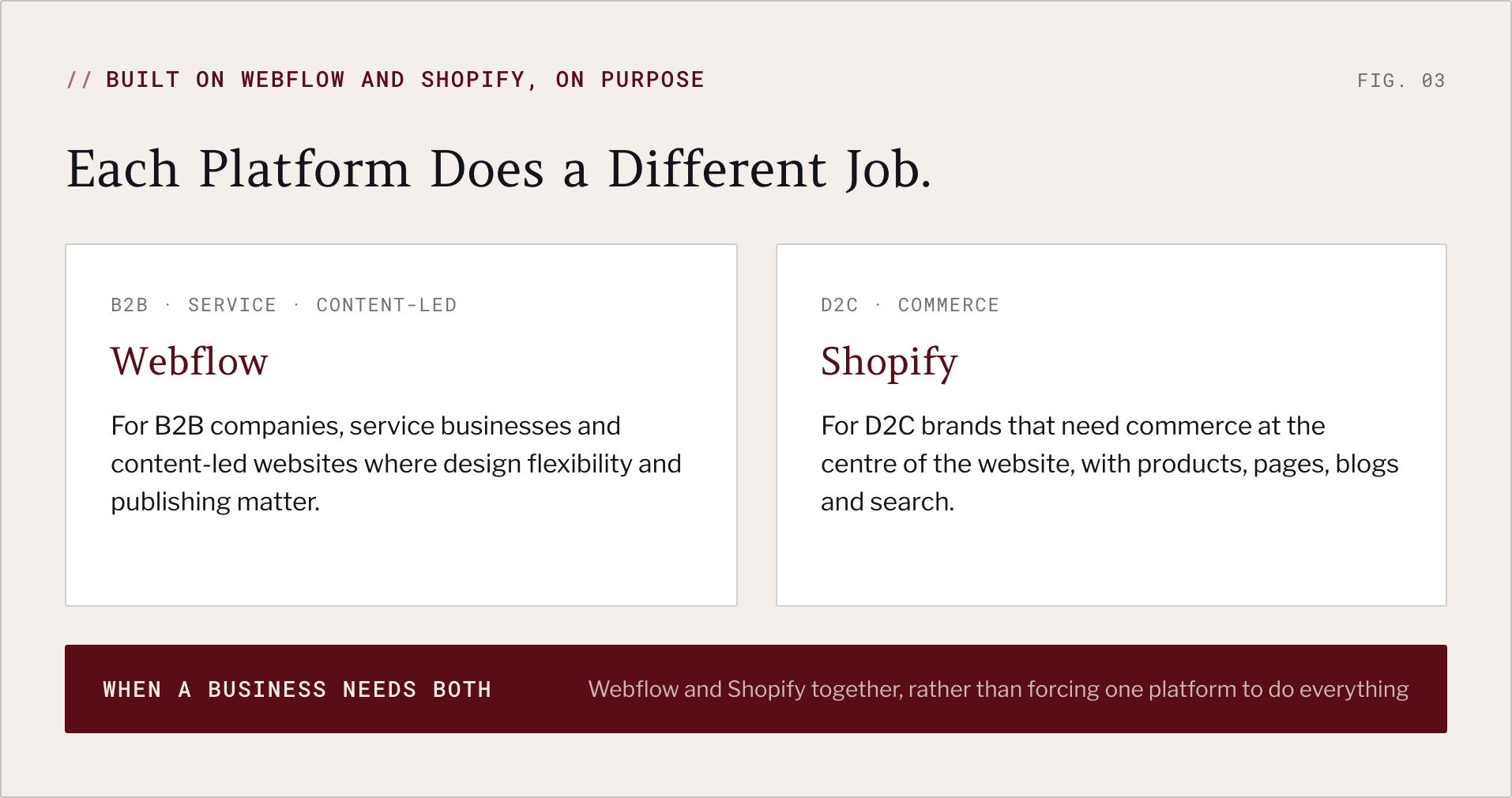
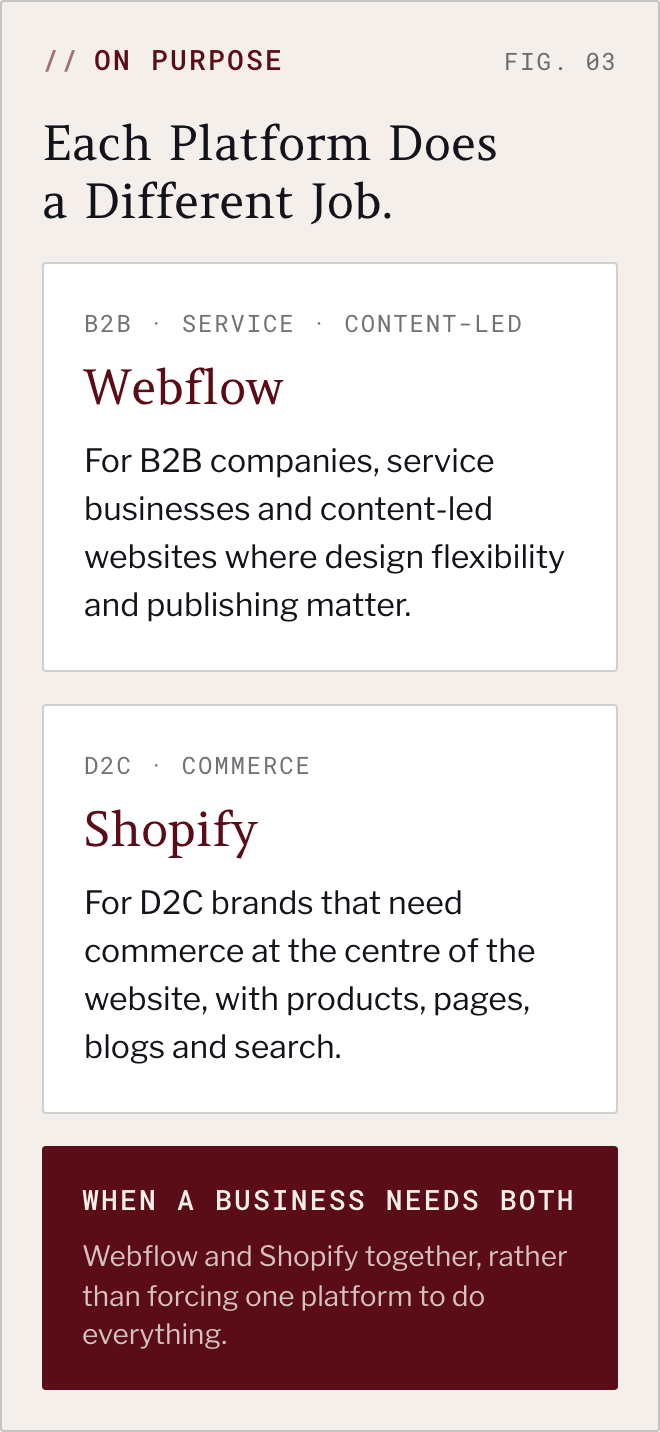
Webflow and Shopify remain core capabilities. Webflow can suit businesses that need control over design and publishing. Shopify puts products, orders, and checkout at the centre of the website.
We also work with Astro, Next.js, custom web and frontend development, and headless implementations. APIs and integrations connect the website with the rest of the business.
AI can be part of the website too. Intelligent search, product discovery, conversational interfaces, personalisation, agents, and automation can help visitors and the team running the site.
We assess these choices against the website's requirements. As those requirements change, the technology can change with them.
What “More Than Looking Good” Actually Means
A good-looking website isn't a bad thing. Of course design matters. The problem begins when design becomes the whole project. For Burgundy, a website build considers things such as:
- Information architecture and navigation
- Mobile-first UI design
- UX writing and clear calls to action
- Website development, features and integrations
- CMS or product structure
- Page speed and Core Web Vitals
- Analytics and event tracking
- Browser and device testing
- SEO Fundamentals
- Launch and DNS
- Post-launch support
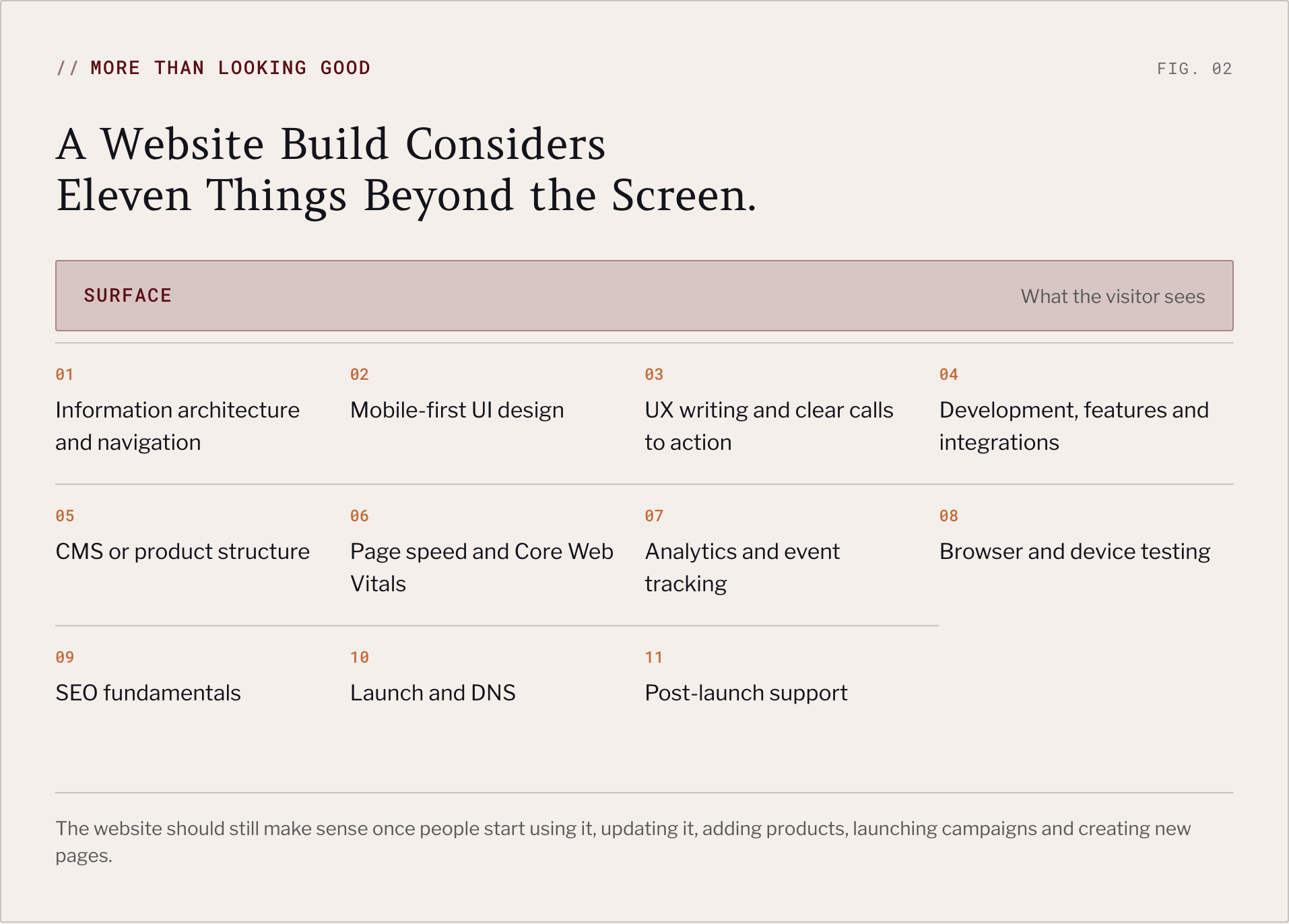

The goal is simple: the website should still make sense once people start using it, updating it, adding products, launching campaigns, and creating new pages.
As the business changes, the website needs enough structure to change with it.
Sometimes You Don't Need a New Website
This is one of the more important parts of Burgundy's approach.
A redesign is not automatically the answer to every website problem.
If leads have dropped, for example, the cause could be the messaging, user journey, mobile experience, page speed, calls to action, tracking, or something else entirely.
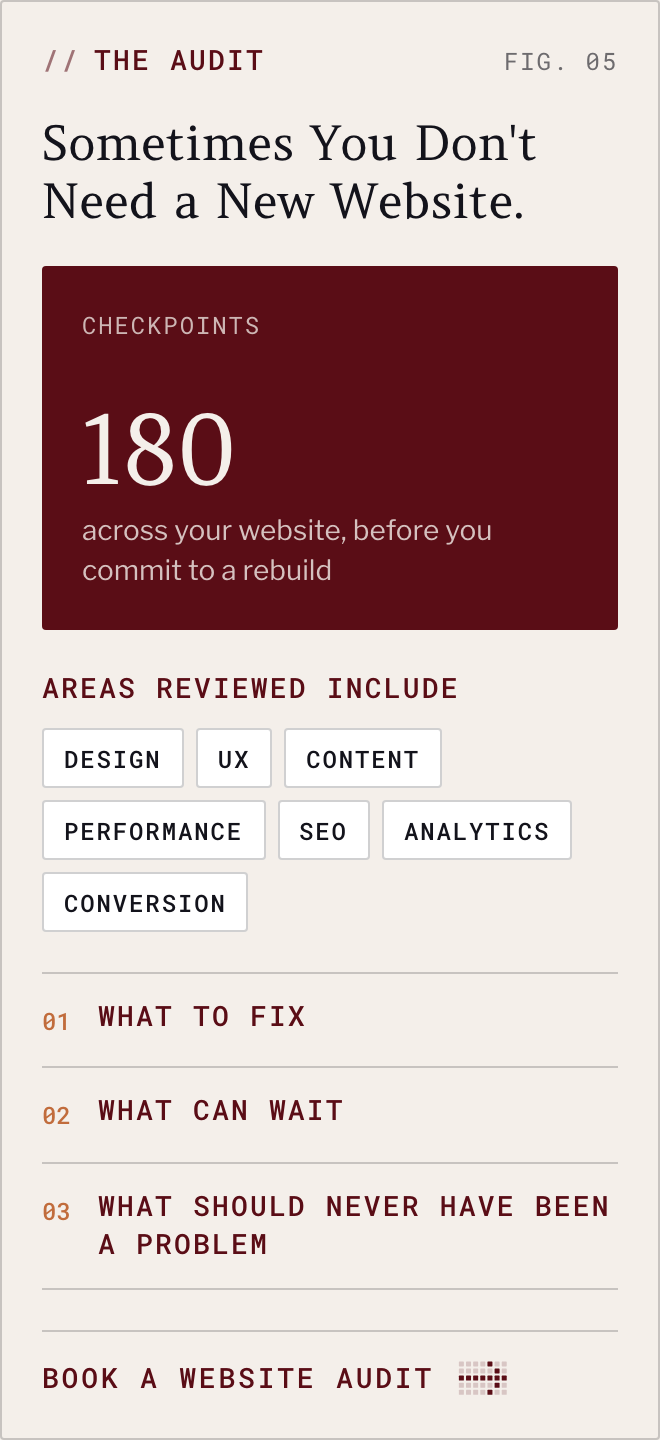
That is why Burgundy offers a website audit before a company commits to a larger rebuild.
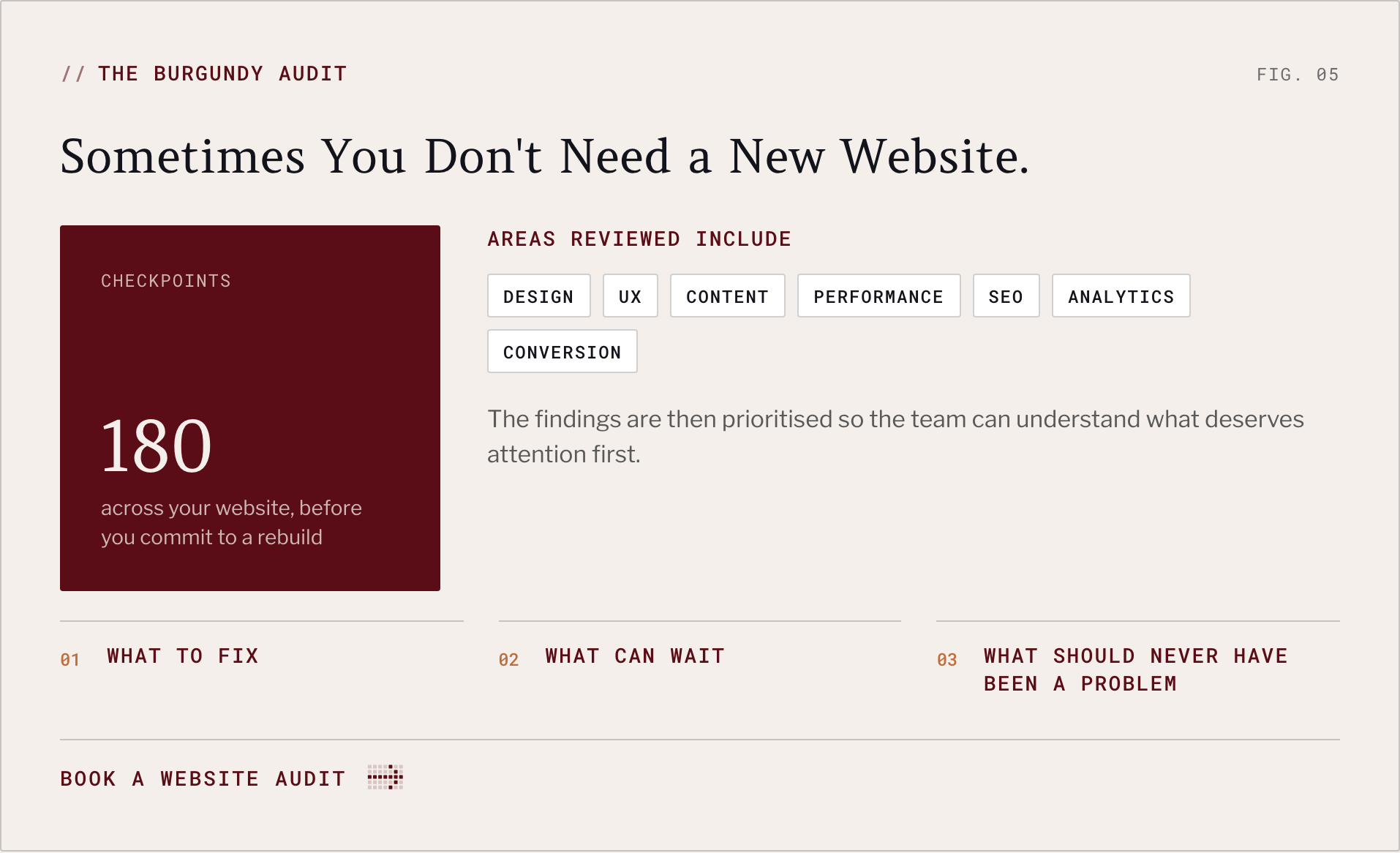
The audit reviews areas including design, UX, content, performance, SEO, analytics, and conversion. The findings are then prioritised so the team can understand what deserves attention first.
The answer might be a redesign, but it could also be a smaller set of improvements, and knowing the difference matters.
Moving Platforms Without Throwing Away Good Work
Another common problem appears when a business has simply outgrown its current setup.
Maybe WordPress has accumulated too many plugins. Maybe Wix or Squarespace no longer gives the team enough control. Or an older Shopify setup has become difficult to manage.
Moving platforms, however, isn't just a matter of copying pages into a new CMS.
Existing URLs, content, metadata, redirects, integrations, and search visibility all need consideration. Burgundy therefore maps what should move, what should change, and what should stay before the migration begins.
This planning matters for search too. Google recommends mapping old URLs to their new destinations, implementing appropriate permanent redirects, testing the new site, and monitoring it after a site move.
A migration should improve the website without casually discarding the value the old one has already built.
A Different Kind of Studio Relationship
Perhaps the clearest difference is not technical at all.
Burgundy was built around the belief that the person you hire should be involved in building the work.
Every project is led by Pranay from the first conversation through launch. The aim is to avoid unnecessary layers and the loss of context that can happen when a project repeatedly changes hands.
That also explains why Burgundy deliberately keeps its project capacity limited. It isn't about doing the most projects possible. It is about giving each project enough attention to do the small things properly.
Built for the Day After Launch
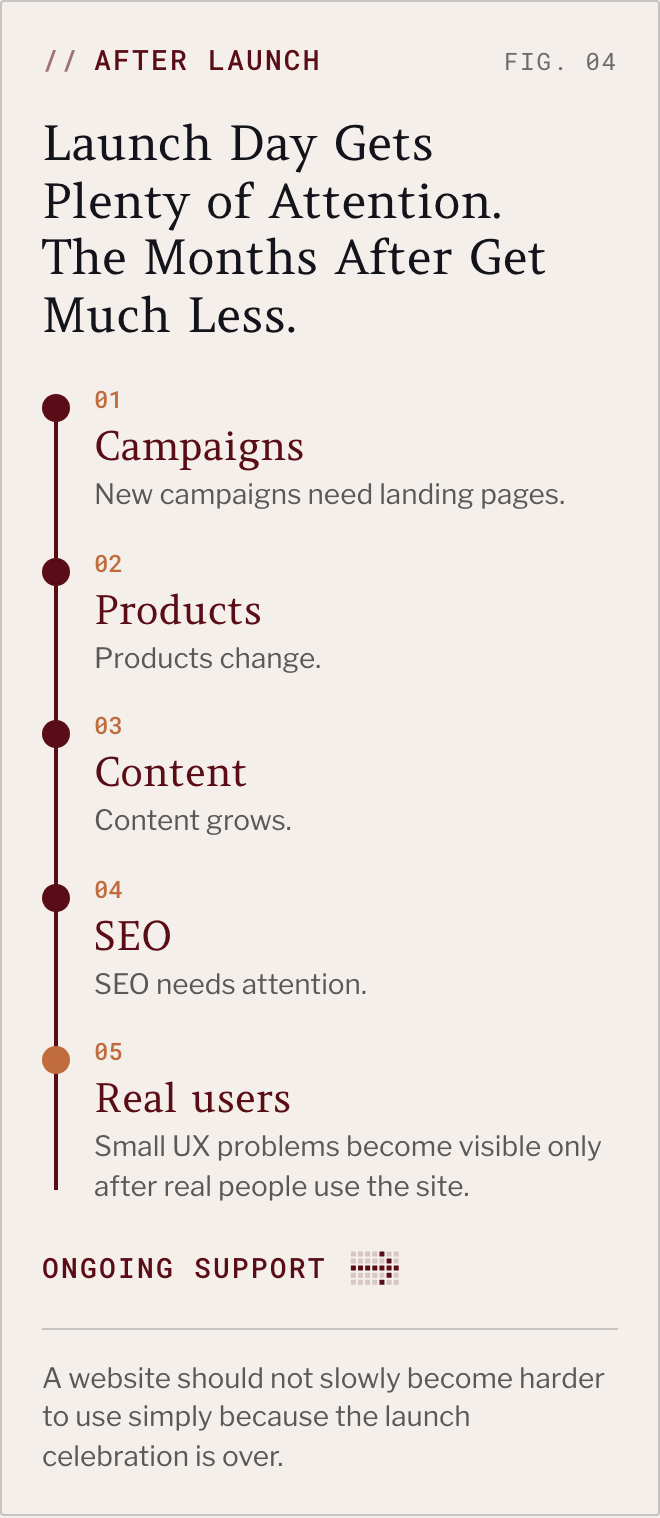
Launch day gets plenty of attention. The months after it usually get much less.
But businesses do not stand still. New campaigns need landing pages. Products change. Content grows. SEO needs attention. Small UX problems become visible only after real people start using the site.

Burgundy therefore also offers WebOps for teams that need regular website improvements without starting a new project every time.
A website should not slowly become harder to use simply because the launch celebration is over.
Bottom Line,
A website is never just one thing. Design matters, but so do the decisions around structure, content, performance, SEO, analytics, and what happens after launch.
That is the thinking behind Burgundy. We audit, build, migrate, and support websites with the same goal in mind: making sure the website works for the business as well as the people using it.
If you’re unsure whether your website needs a rebuild or simply needs the right things fixed, let Burgundy review your website across 180 checkpoints and show you what to fix, what can wait, and what should never have been a problem in the first place.
Book a Website Audit with Burgundy Today.
FAQs